
The UK government has promised to put in place measures worth hundreds of millions of pounds to support any rescue deal for the Indian group's UK business.

Overall, Tata Steel becomes the seventh non-financial firm, including four oil PSUs to report quarterly revenues of Rs 50,000 crore.

Adverse economic conditions in Europe, demand-supply imbalance led to impairment.

Needs funds for Odisha plant expansion, to cut high debt.

Indian benchmark stock indices, Sensex and Nifty, extended their winning streak for a third consecutive day, driven by positive global market trends and a significant softening of crude oil prices following a peace deal between the US and Iran.
The company's planned capex for 2019-2020, which was Rs 12,000 crore, has now been revised down to around Rs 8,000 crore.

The Tata Group had acquired its UK steel operations as part of a 6.7 billion pounds acquisition from Anglo-Dutch steelmaker Corus in 2009.

Tata Steel has warned its suppliers that if they do not slash prices by up to 30 per cent in the long term then they risk losing the steel giant's business.
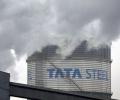
There was an acceptable domestic performance in India but there continues to be concerns about the Europe business and that overshadows the local performance. The consolidated revenues for the Q2FY24 stood at Rs 55,682 crore with an operating profit of Rs 4,315 crore and an operating profit margin of 8 per cent.

Indian benchmark indices Sensex and Nifty closed lower for the second consecutive day, driven by investor caution over conflicting geopolitical signals from West Asia and fresh foreign institutional investor (FII) outflows.

Management buyout vehicle Excalibur Steel, Sanjeev Gupta's Liberty House metals group, India's JSW Steel Ltd and Greybull Capital have submitted separate bids

Indian benchmark indices, Sensex and Nifty, ended lower in choppy trade, with the Sensex declining 114 points, as investors reacted to unabated foreign fund outflows and rising geopolitical uncertainties.
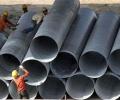
European Union steel prices hit their lowest since 2004

Indian benchmark equity indices, Sensex and Nifty, rebounded on Wednesday, recovering intraday losses, primarily driven by strong fag-end buying and a significant rally in blue-chip Reliance Industries.

The Indian operations continued their steady performance against a backdrop of lacklustre demand in the market place and increasing imports.

Indian benchmark indices, Sensex and Nifty, closed marginally higher after a volatile trading session, driven by value buying in IT and select blue-chip counters, despite global crude price hikes and a weak rupee.
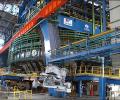
The British government has been under pressure to help a sale process go through after Tata said it would sell its British business.
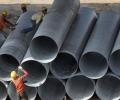
A bleak demand outlook for steel in the domestic as well as global market is also another reason Tata Steel may be looking to have additional liquidity as margins are expected to take a hit in the coming quarters.

While admitting that $12-billion deal to acquire the Anglo-Dutch steel maker Corus was 'expensive', Tata, however, said he was hopeful of a turnaround by the struggling European steel giant.

From setting up cutting-edge facilities to cater to the domestic market and building capabilities of global standards, the action is building up.

'The steel industry has a multiplier effect on direct and indirect employment, national security on the supply chain, technology access etc.'

Britain's traditionally anti-EU media have blamed Brussels for preventing London from taking greater steps to protect the industry.

Indian benchmark equity indices, Sensex and Nifty, closed lower due to investor caution over rising bond yields, a weaker rupee, and fresh fuel price hikes, which have revived inflation concerns.
'Due to tariff uncertainty, automotive customers reduced their steel uplift by almost 15 per cent.'
Equity benchmark indices Sensex and Nifty ended higher in highly volatile trade on Tuesday, buoyed by heavy buying in bank and metal stocks, a firm trend in global markets and optimism over India-EU FTA. The 30-share BSE Sensex climbed 319.78 points, or 0.39 per cent, to settle at 81,857.48.

Indian benchmark stock indices Sensex and Nifty rallied for the second consecutive day, closing nearly 1 per cent higher, driven by gains in metal and auto sectors and positive global market trends.
Indian stock market benchmarks Sensex and Nifty rebounded by over 1% on Monday, driven by value-buying in banking stocks after a three-day slump. Key gainers included UltraTech Cement, HDFC Bank, and Mahindra & Mahindra.

Indian benchmark indices Sensex and Nifty experienced a sharp decline in early trading due to escalating tensions in the Middle East, driving crude oil prices higher. Global market bearishness and foreign fund outflows further contributed to investor unease.
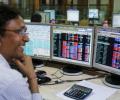
Indian equity markets experienced a volatile session, with the Sensex and Nifty recovering some ground after a significant plunge the previous day. Gains were driven by PSU bank, IT, and metal stocks, but concerns over rising fuel prices and geopolitical tensions limited the recovery.

In March, Tata Steel announced its intention to sell the entire 10.5 million-tonne UK assets.

Equity indices failed to hold on to their gains in see-saw trade on Tuesday, ending in the red for the third straight session despite a tentative recovery in global equities. The rupee too bounced back from historic lows, but the overall sentiment remained risk-averse amid concerns over economic recovery in a high interest rate scenario. The 30-share BSE Sensex had a choppy start but gained momentum in mid-session trade. However, it succumbed to selling pressure towards the fag end to close 105.82 points or 0.19 per cent lower at 54,364.85. On similar lines, the broader NSE Nifty declined 61.80 points or 0.38 per cent to finish at 16,240.05.

From the Sensex pack, Eternal, Bharat Electronics Ltd, Trent, Axis Bank, State Bank of India, Bajaj Finance, Sun Pharmaceuticals, Asian Paints, Adani Ports, Hindustan Unilever, Reliance Industries, ITC, PowerGrid, Tata Motors Ltd's Commercial Vehicles business, and Bajaj Finserv were the gainers. Infosys, Tata Motors Passenger Vehicles, Tata Steel, ICICI Bank, Tech Mahindra, Titan, UltraTech Cement, Maruti Suzuki India, and Larsen & Toubro were the laggards.

According to data available on the website of World Steel Organisation, only eight steelmakers produced over 20 million tonne (mt) steel in 2009 with ArcelorMittal, leading at 77.5 mt.
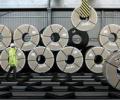
With Euro zone problems, it continues to weather rough times, with 900 jobs cut as latest decision.

On the other hand, the group's two traditional cash cows, TCS and Tata Motors' subsidiary Jaguar Land Rover, are slowing as other businesses pick up pace

Among Sensex firms, Bharti Airtel, Reliance Industries, Eternal, State Bank of India, Tata Steel and HDFC Bank were the major gainers. However, Kotak Mahindra Bank, Bharat Electronics, Infosys and Bajaj Finance were among the laggards.

The change in the brand name can show up on the company's locations, stationary and vehicles. The rebranding process, if approved by the company, is expected to commence next summer.
Industrial metals (ferrous and non-ferrous) suffered great volatility once the Ukraine War began in February 2022. First, there was a sharp price rise due to fears of supply disruption, followed by weak global demand. China's weakness and rolling lockdowns have hit production and demand.

Cyrus Mistry undertook quite a few significant initiatives at the Tata Group in the past two years.
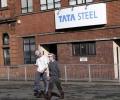
The Anglo-Dutch merger was meant to revive the ailing British Steel which had incurred a net loss of 81 million in the year ended March 31, 1999
